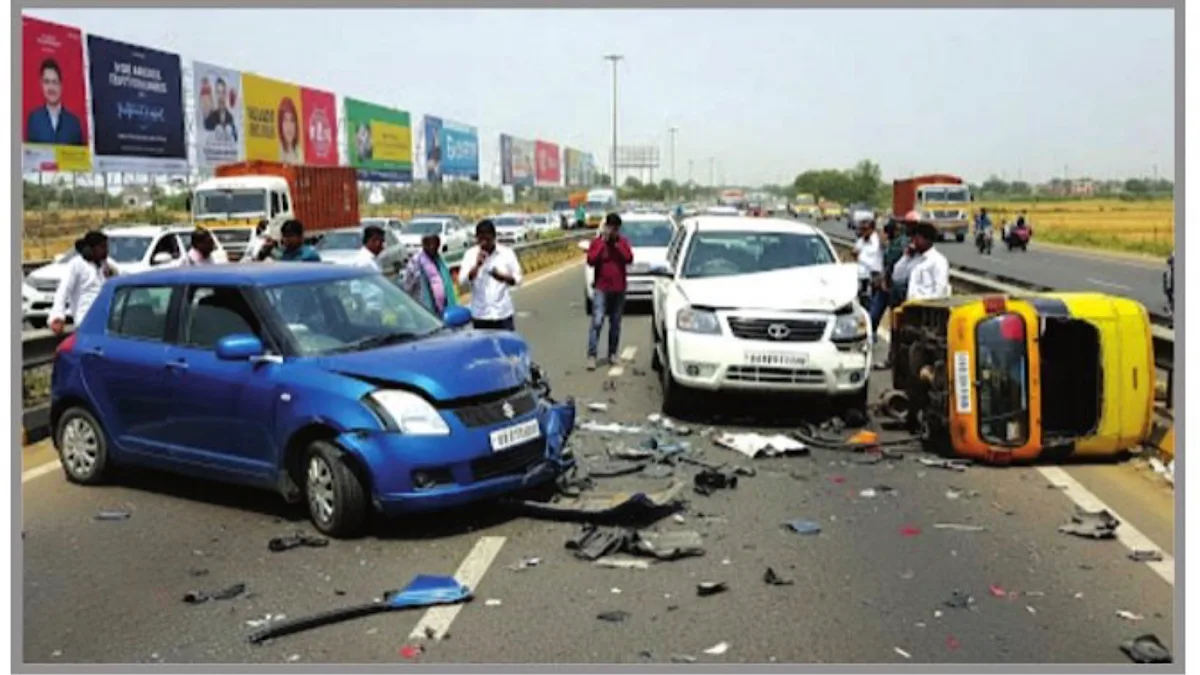
India’s highways are among the busiest in the world, yet they also rank among the most dangerous. According to “Data for India”, over 150,000 road accident deaths occurred in the country in 2022. However, Sample Registration System (SRS) estimates suggest the actual number may be closer to 270,000. The Ministry of Road Transport and Highways (MoRTH) publishes annual reports confirming that national highways and state highways together account for more than 60 per cent of total road fatalities.
The reasons are multifaceted, involving human behaviour, infrastructure shortcomings, and systemic enforcement gaps. One of the primary causes is over-speeding. Highways are designed for faster travel, but in India, speed limits are poorly enforced. Drivers often exceed safe speeds, which is highly dangerous, on stretches with minimal traffic or poor signages. This becomes deadly when combined with sudden curves, potholes, or unexpected obstacles like animals or pedestrians crossing the road. Driver fatigue is another major contributor. Long-haul truck drivers and commercial vehicle operators frequently drive for extended hours without rest, leading to drowsiness and impaired judgment. Many lack formal training in defensive driving or fatigue management, increasing the risk of collisions. Infrastructure deficiencies also play a critical role.
Advertisement
Many highways lack proper lighting, lane markings, and protective barriers. Black spots-areas with a high frequency of accidents – are often left unaddressed. In rural areas, highways double as local roads, with slow-moving vehicles – two and three wheelers, tractors, bullock carts, pedestrians and livestock sharing space with speeding cars, buses, and trucks. This mix of traffic types creates unpredictable and hazardous conditions. Enforcement of traffic laws is weak. Highway patrols are sparse, and violations like drunk driving, reckless overtaking, wrong side driving, and driving without seatbelts or helmets or headlights in the night, often go unchecked. Even when laws exist, implementation is inconsistent, corruption rots the enforcing system, and penalties are not always a deterrent. To reduce highway accidents, India needs a comprehensive strategy that integrates engineering, enforcement, education, and emergency response.
First, road engineering must improve. Authorities should identify accident-prone zones and redesign them with better signage, lighting, rumble strips, and pedestrian crossings. Smart traffic management systems using AI and real-time monitoring can help regulate speed and alert drivers to hazards. Second, enforcement must be strengthened. Automated systems like speed cameras and number plate recognition can catch violators without relying solely on human patrols. Increasing the presence of trained highway police and equipping them with modern tools will also help. Every vehicle owner, regardless of type, should maintain a savings bank account with a minimum balance linked to their vehicle registration number. Roadside cameras must capture the registration numbers of vehicles violating traffic rules, and fines should be automatically deducted from the linked bank accounts.
The license of the driver should be suspended permanently or temporarily and the vehicle seized for repeated offences Third, driver education is crucial. Licensing reforms should include mandatory training, especially for commercial drivers. A graduated licensing system is a structured approach to issuing driving licenses that allows new drivers to gain experience and skills gradually before receiving full driving privileges. It is designed to reduce accidents, esp e cially among yo ung or inexperienced drivers. Such a system must be implemented throughout the country, at the earliest. Fourth, the movement of slow-moving vehicles – including tractors, bullock carts, bicycles, tippers, and two- and three-wheelers – should be prohibited on national highways to ensure smooth and safe traffic flow.
Additionally, both sides of the highway should be fenced to prevent stray animals from entering the roadway and causing accidents Fifth, vehicle safety standards must be enforced. Mandatory crash testing, and safety features like airbags, ABS, and electronic stability control should be standard. Regular fitness checks for commercial vehicles can prevent mechanical failures on the road. Sixth, emergency response systems need to be robust. The “golden hour” after an accident is critical. Improving ambulance availability, trauma care facilities, and GPS-based emergency helplines can save lives. Finally, public awareness campaigns should promote safe driving habits.
Mass media, schools, and community outreach can help instil a culture of road safety. People who steal from the vehicles involved in an accident must be punished. In summary, reducing highway accidents in India requires systemic reform. Safer roads, stricter enforcement, better-trained drivers, and faster emergency response can collectively make highways safer for everyone. (The writer is a retired Scientist of the CSIR)